
Dubai_DubaiNews_dubai city gui
Dubai (/duːˈbaɪ/ doo-BY; Arabic: دبي Dubay, Gulf Arabic: Arabic pronunciation: [dʊˈbɑj]) is the largest and most populous city in the United Arab Emirates (UAE).[5] On the southeast coast of the Persian Gulf, it is the capital of the Emirate of Dubai, one of the seven emirates that make up the country.[6][7][8]
Dubai is a global city and business hub of the Middle East.[9] It is also a major global transport hub for passengers and cargo.[10] Oil revenue helped accelerate the development of the city, which was already a major mercantile hub, but Dubai's oil reserves are limited and production levels are low: today, less than 5% of the emirate's revenue comes from oil.[11] A growing centre for regional and international trade since the early 20th century, Dubai's economy today relies on revenues from trade, tourism, aviation, real estate, and financial services.[12][13][14][15]
Dubai has attracted world attention through large construction projects and sports events, in particular the world's tallest building, the Burj Khalifa. As of 2012, Dubai was the most expensive city in the Middle East.[16][17] In 2014, Dubai's hotel rooms were rated as the second most expensive in the world.[18][19]
Contents
- 1Etymology
-
2History
- 2.1Establishment of modern Dubai
- 2.2Pre-oil Dubai
- 2.3Oil era
- 2.4Reaching the UAE's Act of Union
- 2.5Modern Dubai
- 3Geography
- 4Climate
-
5Governance and politics
- 5.1Law enforcement
- 5.2Alcohol laws
- 6Human rights
- 7Crime rate
-
8Demographics
- 8.1Ethnicity and languages
- 8.2Religion
-
9Economy
- 9.1Tourism and retail
- 9.2Expo 2020
-
10Cityscapes
-
10.1Architecture
- 10.1.1Burj Al Arab
- 10.1.2Burj Khalifa
- 10.2Palm Jumeirah
- 10.3Dubai Miracle Garden
-
10.1Architecture
-
11Transportation
- 11.1Road
- 11.2Air
- 11.3Metro rail
- 11.4Palm Jumeirah Monorail
- 11.5Tram
- 11.6High speed rail
- 11.7Waterways
-
12Culture
- 12.1Cuisine
- 12.2Entertainment
- 12.3Media
- 12.4Sports
- 12.5Dress code
- 13Education
- 14Healthcare
- 15Notable people
-
16International relations
- 16.1Twin towns and sister cities
- 17See also
- 18References
- 19Further reading
- 20External links
Etymology
Many theories have been proposed as to the origin of the word "Dubai". One theory suggests the word was used to describe the souq, which was similar to the souq in Ba.[20] An Arabic proverb says "Daba Dubai" (Arabic: دبا دبي), meaning "They came with a lot of money."[21] According to Fedel Handhal, a scholar on the UAE's history and culture, the word Dubai may have come from the word daba (Arabic: دبا) (a past tense derivative of yadub (Arabic: يدب), which means "to creep"), referring to the slow flow of Dubai Creek inland. The poet and scholar Ahmad Mohammad Obaid traces it to the same word, but to its alternative meaning of "baby locust" (Arabic: جراد) due to the abundant nature of locusts in the area before settlement.[22]
History

The history of human settlement in the area now defined by the United Arab Emirates is rich and complex, and points to extensive trading links between the civilisations of the Indus Valley and Mesopotamia, but also as far afield as the Levant.[23] Archaeological finds in the emirate of Dubai, particularly at Al-Ashoosh, Al Sufouh and the notably rich trove from Saruq Al Hadid[24] show settlement through the Ubaid and Hafit periods, the Umm Al Nar and Wadi Suq periods and the three Iron Ages in the UAE. The area was known to the Sumerians as Magan, and was a source for metallic goods, notably copper and bronze.[25]
The area was covered with sand about 5,000 years ago as the coast retreated inland, becoming part of the city's present coastline.[26][27]Pre-Islamic ceramics have been found from the 3rd and 4th centuries.[28] Prior to the introduction of Islam to the area, the people in this region worshiped Bajir (or Bajar).[28] After the spread of Islam in the region, the Umayyad Caliph of the eastern Islamic world invaded south-east Arabia and drove out the Sassanians. Excavations by the Dubai Museum in the region of Al-Jumayra (Jumeirah) found several artefacts from the Umayyad period.[29]
The earliest recorded mention of Dubai is in 1095 in the Book of Geography by the Andalusian-Arab geographer Abu Abdullah al-Bakri.[citation needed] The Venetian pearl merchant Gasparo Balbi visited the area in 1580 and mentioned Dubai (Dibei) for its pearlingindustry.[29]
Establishment of modern Dubai
Dubai is thought to have been established as a fishing village in the early 18th century[30] and was, by 1822, a town of some 7–800 members of the Bani Yastribe and subject to the rule of Sheikh Tahnun bin Shakhbut of Abu Dhabi.[31]
In 1833, following tribal feuding, members of the Al Bu Falasah tribe seceded from Abu Dhabi and established themselves in Dubai. The exodus from Abu Dhabi was led by Obeid bin Saeed and Maktoum bin Butti, who became joint leaders of Dubai until Ubaid died in 1836, leaving Maktum to establish the Maktoum dynasty.[30]
Dubai signed the General Maritime Treaty of 1820 along with other Trucial States, following the British punitive expedition against Ras Al Khaimah of 1819, which also led to the bombardment of the coastal communities of the Persian Gulf. This led to the 1853 Perpetual Maritime Truce. Dubai also – like its neighbours on the Trucial Coast – entered into an exclusivity agreement in which the United Kingdom took responsibility for the emirate's security in 1892.
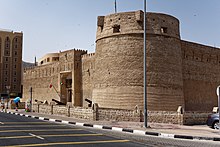
In 1841, a smallpox epidemic broke out in the Bur Dubai locality, forcing residents to relocate east to Deira.[32] In 1896, fire broke out in Dubai, a disastrous occurrence in a town where many family homes were still constructed from barasti - palm fronds. The conflagration consumed half the houses of Bur Dubai, while the district of Deira was said to have been totally destroyed. The following year, more fires broke out. A female slave was caught in the act of starting one such blaze and was subsequently put to death.[33]

In 1901, Maktoum bin Hasher Al Maktoum established Dubai as a free port with no taxation on imports or exports and also gave merchants parcels of land and guarantees of protection and tolerance. These policies saw a movement of merchants not only directly from Lingeh,[34] but also those who had settled in Ras Al Khaimah and Sharjah (which had historical links with Lingeh through the Al Qawasim tribe) to Dubai. An indicator of the growing importance of the port of Dubai can be gained from the movements of the steamer of the Bombay and Persia Steam Navigation Company, which from 1899 to 1901 paid five visits annually to Dubai. In 1902 the company's vessels made 21 visits to Dubai and from 1904 on,[35] the steamers called fortnightly – in 1906, trading seventy thousand tonnes of cargo.[36] The frequency of these vessels only helped to accelerate Dubai's role as an emerging port and trading hub of preference. Lorimer notes the transfer from Lingeh 'bids fair to become complete and permanent',[34] and also that the town had by 1906 supplanted Lingeh as the chief entrepôt of the Trucial States.[37]
The 'great storm' of 1908 struck the pearling boats of Dubai and the coastal emirates towards the end of the pearling season that year, resulting in the loss of a dozen boats and over 100 men. The disaster was a major setback for Dubai, with many families losing their breadwinner and merchants facing financial ruin. These losses came at a time when the tribes of the interior were also experiencing poverty. In a letter to the Sultan of Muscat in 1911, Butti laments, 'Misery and poverty are raging among them, with the result that they are struggling, looting and killing among themselves.'[38]
Pre-oil Dubai
Dubai's geographical proximity to Iran made it an important trade location. The town of Dubai was an important port of call for foreign tradesmen, chiefly those from Iran, many of whom eventually settled in the town. By the beginning of the 20th century, it was an important port.[39] At that time, Dubai consisted of the town of Dubai and the nearby village of Jumeirah, a collection of some 45 areesh, or palm leaf.[37] Dubai was known for its pearl exports until the 1930s; the pearl trade was damaged irreparably by the 1929 Great Depression and the innovation of cultured pearls. With the collapse of the pearling industry, Dubai fell into a deep depression and many residents lived in poverty or migrated to other parts of the Persian Gulf.[26]
In the early days since its inception, Dubai was constantly at odds with Abu Dhabi. In 1947, a border dispute between Dubai and Abu Dhabi on the northern sector of their mutual border escalated into war.[40] Arbitration by the British resulted in a cessation of hostilities.[41]


Despite a lack of oil, Dubai's ruler from 1958, Sheikh Rashid bin Saeed Al Maktoum, used revenue from trading activities to build infrastructure. Private companies were established to build and operate infrastructure, including electricity, telephone services and both the ports and airport operators.[42] An airport of sorts (a runway built on salt flats) was established in Dubai in the 1950s and, in 1959, the emirate's first hotel, the Airlines Hotel, was constructed. This was followed by the Ambassador and Carlton Hotels in 1968.[43]
1959 saw the establishment of Dubai's first telephone company, 51% owned by IAL (international Aeradio Ltd) and 49% by Sheikh Rashid and local businessmen and in 1961 both the electricity company and telephone company had rolled out operational networks.[44] The water company (Sheikh Rashid was Chairman and majority shareholder) constructed a pipeline from wells at Awir and a series of storage tanks and, by 1968, Dubai had a reliable supply of piped water.[44]
On 7 April 1961, the Dubai-based MV Dara, a five thousand ton British flagged vessel that plied the route between Basra (Iraq), Kuwait and Bombay (India), was caught in unusually high winds off Dubai. Early the next morning in heavy seas off Umm al-Quwain, an explosion tore out the second class cabins and started fires. The captain gave the order to abandon ship but two lifeboats capsized and a second explosion occurred. A flotilla of small boats from Dubai, Sharjah, Ajman and Umm al-Quwain picked up survivors but in all 238 lives were lost in the disaster.[45]
Construction of Dubai's first airport was started on the Northern edge of the town in 1959 and the terminal building opened for business in September 1960. The airport was initially serviced by Gulf Aviation (flying Dakotas, Herons and Viscounts) but Iran Air commenced services to Shiraz in 1961.[44]
In 1962 the British Political Agent noted that "Many new houses and blocks of offices and flats are being built... the Ruler is determined, against advice [from the British] to press on with the construction of a jet airport... More and more European and Arab firms are opening up and the future looks bright."[43]
In 1962, with expenditure on infrastructure projects already approaching levels some thought imprudent, Sheikh Rashid approached his brother in law, the Ruler of Qatar, for a loan to build the first bridge crossing Dubai's creek. This crossing was finished in May 1963 and was paid for by a toll levied on the crossing from the Dubai side of the creek to the Deira side.[42]
BOAC was originally reluctant to start regular flights between Bombay and Dubai, fearing a lack of demand for seats. However, by the time the asphalt runway of Dubai Airport was constructed in 1965, opening Dubai to both regional and long haul traffic, a number of foreign airlines were competing for landing rights.[42] In 1970 a new airport terminal building was constructed which included Dubai's first duty-free shops.[46]
Throughout the 1960s Dubai was the centre of a lively gold trade, with 1968 imports of gold at some £56 million. This gold was, in the vast majority, re-exported - mainly to customers who took delivery in international waters off India. The import of gold to India had been banned and so the trade was characterised as smuggling, although Dubai's merchants were quick to point out that they were making legal deliveries of gold and that it was up to the customer where they took it.[47]
In 1966, more gold was shipped from London to Dubai than almost anywhere else in the world (Only France and Switzerland took more), at 4 million ounces. Dubai also took delivery of over $15 million-worth of watches and over 5 million ounces of silver. The 1967 price of gold was $35 an ounce but its market price in India was $68 an ounce - a healthy markup. Estimates at the time put the volume of gold imports from Dubai to India at something like 75% of the total market.[48]
Oil era

After years of exploration following large finds in neighbouring Abu Dhabi, oil was eventually discovered in territorial waters off Dubai in 1966, albeit in far smaller quantities. The first field was named 'Fateh' or 'good fortune'. This led to an acceleration of Sheikh Rashid's infrastructure development plans and a construction boom that brought a massive influx of foreign workers, mainly Asians and Middle easterners. Between 1968 and 1975 the city's population grew by over 300%.[49]
As part of the infrastructure for pumping and transporting oil from the Fateh field, located offshore of the Jebel Ali area of Dubai, two 500,000 gallon storage tanks were built, known locally as 'Kazzans',[50] by welding them together on the beach and then digging them out and floating them to drop onto the seabed at the Fateh field. These were constructed by the Chicago Bridge and Iron Company, which gave the beach its local name (Chicago Beach), which was transferred to the Chicago Beach Hotel, which was demolished and replaced by the Jumeirah Beach Hotel in the late 1990s. The Kazzans were an innovative oil storage solution which meant super-tankers could moor offshore even in bad weather and avoided the need to pipe oil onshore from Fateh, which is some 60 miles out to sea.[51]
Dubai had already embarked on a period of infrastructural development and expansion. Oil revenue, flowing from 1969 onwards supported a period of growth with Sheikh Rashid embarking on a policy of building infrastructure and a diversified trading economy before the emirate's limited reserves were depleted. Oil accounted for 24% of GDP in 1990, but had reduced to 7% of GDP by 2004.[10]
Critically, one of the first major projects Sheikh Rashid embarked upon when oil revenue started to flow was the construction of Port Rashid, a deep water free port constructed by British company Halcrow. Originally intended to be a four-berth port, it was extended to sixteen berths as construction was ongoing. The project was an outstanding success, with shipping queuing to access the new facilities. The port was inaugurated on 5 October 1972, although its berths were each pressed into use as soon as they had been built. Port Rashid was to be further expanded in 1975 to add a further 35 berths before the larger port of Jebel Ali was constructed.[10]
Port Rashid was the first of a swath of projects designed to create a modern trading infrastructure, including roads, bridges, schools and hospitals.[52]
Reaching the UAE's Act of Union

Dubai and the other 'Trucial States' had long been a British protectorate where the British government took care of foreign policy and defence, as well as arbitrating between the rulers of the Eastern Gulf, the result of a treaty signed in 1892, the 'Exclusive Agreement'. This was to change with PM Harold Wilson's announcement, on 16 January 1968, that all British troops were to be withdrawn from 'East of Aden'. The decision was to pitch the coastal emirates, together with Qatar and Bahrain, into fevered negotiations to fill the political vacuum that the British withdrawal would leave behind.[53]
The principle of union was first agreed between the ruler of Abu Dhabi, Sheikh Zayed bin Sultan Al Nahyan, and Sheikh Rashid of Dubai on 18 February 1968 meeting in an encampment at Argoub Al Sedirah, near Al Semeih, a desert stop between the two emirates.[54] The two agreed to work towards bringing the other emirates, including Qatar and Bahrain, into the union. Over the next two years, negotiations and meetings of the rulers followed -often stormy- as a form of union was thrashed out. The nine-state union was never to recover from the October 1969 meeting where heavy-handed British intervention resulted in a walk-out by Qatar and Ras Al Khaimah.[43] Bahrain and Qatar dropped out of talks, leaving six of the seven 'trucial' emirates to agree on union on 18 July 1971.[55]
On 2 December 1971, Dubai, together with Abu Dhabi, Sharjah, Ajman, Umm al-Quwain and Fujairah joined in the Act of Union to form the United Arab Emirates. The seventh emirate, Ras Al Khaimah, joined the UAE on 10 February 1972, following Iran's annexation of the RAK-claimed Tunbs islands.[56]
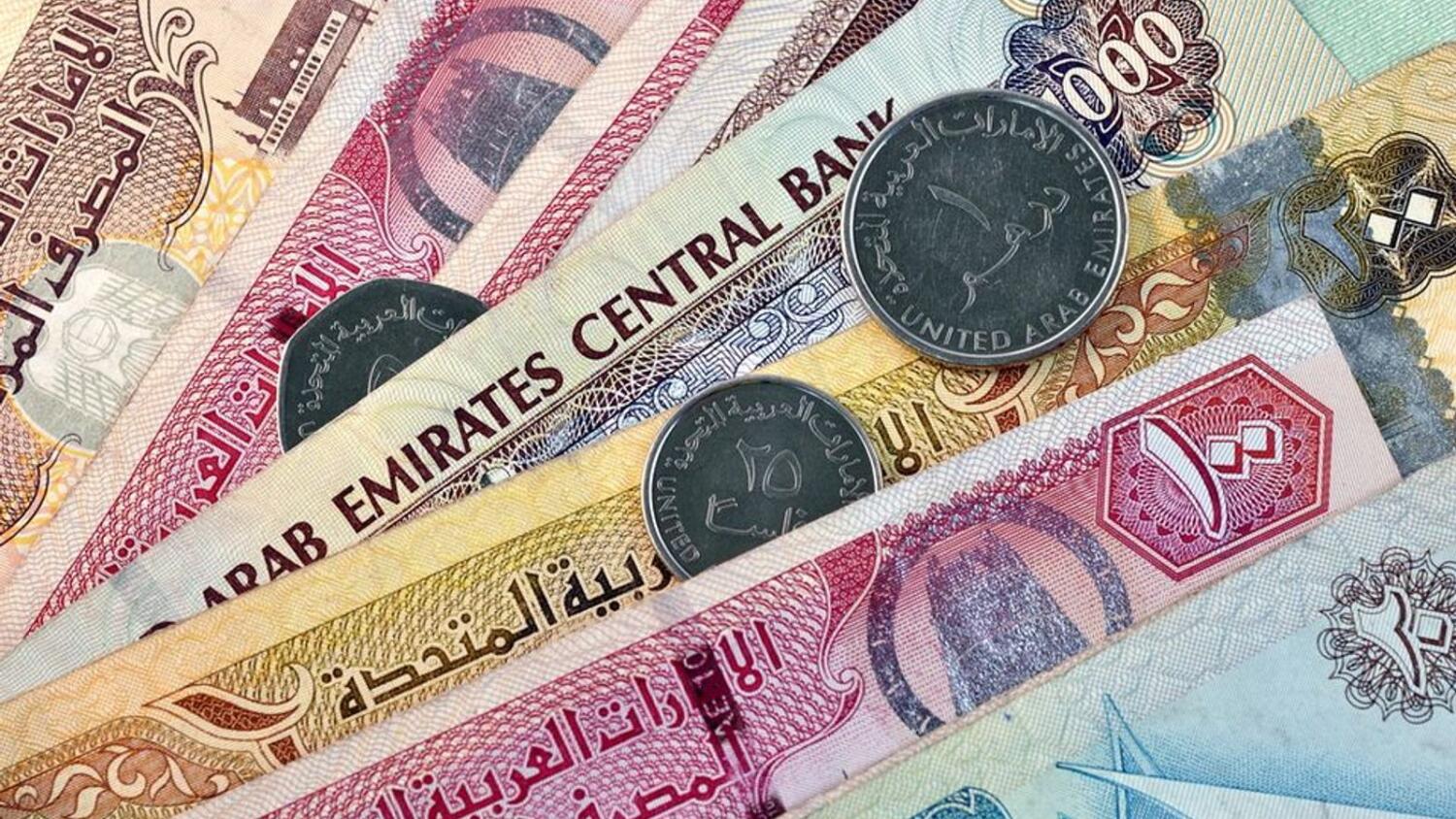
In 1973, Dubai joined the other emirates to adopt a uniform currency: the UAE dirham.[39] In that same year, the prior monetary union with Qatar was dissolved and the UAE Dirham was introduced throughout the Emirates.[57]
Modern Dubai

During the 1970s, Dubai continued to grow from revenues generated from oil and trade, even as the city saw an influx of immigrants fleeing the Lebanese civil war.[58] Border disputes between the emirates continued even after the formation of the UAE; it was only in 1979 that a formal compromise was reached that ended disagreements.[59] The Jebel Ali port was established in 1979. JAFZA (Jebel Ali Free Zone) was built around the port in 1985 to provide foreign companies unrestricted import of labour and export capital.[60] Dubai airport and the aviation industry also continued to grow.
The Gulf War of 1990 had a negative financial effect on the city, as depositors withdrew their money and traders withdrew their trade, but subsequently, the city recovered in a changing political climate and thrived. Later in the 1990s, many foreign trading communities—first from Kuwait, during the Gulf War, and later from Bahrain, during the Shia unrest—moved their businesses to Dubai.[61] Dubai provided refuelling bases to allied forces at the Jebel Ali Free Zone during the Gulf War, and again during the 2003 Invasion of Iraq. Large increases in oil prices after the Gulf War encouraged Dubai to continue to focus on free trade and tourism.[62]
Geography
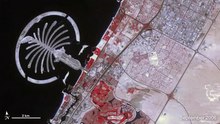

Dubai is situated on the Persian Gulf coast of the United Arab Emirates and is roughly at sea level (16 m or 52 ft above). The emirate of Dubai shares borders with Abu Dhabi in the south, Sharjah in the northeast, and the Sultanate of Oman in the southeast. Hatta, a minor exclave of the emirate, is surrounded on three sides by Oman and by the emirates of Ajman (in the west) and Ras Al Khaimah (in the north). The Persian Gulf borders the western coast of the emirate. Dubai is positioned at 25.2697°N 55.3095°E and covers an area of 1,588 sq mi (4,110 km2), which represents a significant expansion beyond its initial 1,500 sq mi (3,900 km2) designation due to land reclamation from the sea.[citation needed]
Dubai lies directly within the Arabian Desert. However, the topography of Dubai is significantly different from that of the southern portion of the UAE in that much of Dubai's landscape is highlighted by sandy desert patterns, while gravel deserts dominate much of the southern region of the country.[63] The sand consists mostly of crushed shell and coral and is fine, clean and white. East of the city, the salt-crusted coastal plains, known as sabkha, give way to a north-south running line of dunes. Farther east, the dunes grow larger and are tinged red with iron oxide.[49]
The flat sandy desert gives way to the Western Hajar Mountains, which run alongside Dubai's border with Oman at Hatta. The Western Hajar chain has an arid, jagged and shattered landscape, whose mountains rise to about 1,300 metres (4,265 feet) in some places. Dubai has no natural river bodies or oases; however, Dubai does have a natural inlet, Dubai Creek, which has been dredged to make it deep enough for large vessels to pass through. Dubai also has multiple gorges and waterholes, which dot the base of the Western Al Hajar mountains. A vast sea of sand dunes covers much of southern Dubai and eventually leads into the desert known as The Empty Quarter. Seismically, Dubai is in a very stable zone—the nearest seismic fault line, the Zagros Fault, is 200 kilometres (124 miles) from the UAE and is unlikely to have any seismic impact on Dubai.[64] Experts also predict that the possibility of a tsunami in the region is minimal because the Persian Gulf waters are not deep enough to trigger a tsunami.[64]

The sandy desert surrounding the city supports wild grasses and occasional date palms. Desert hyacinths grow in the sabkha plains east of the city, while acacia and ghaf trees grow in the flat plains within the proximity of the Western Al Hajar mountains. Several indigenous trees such as the date palm and neem as well as imported trees such as the eucalypts grow in Dubai's natural parks. The houbara bustard, striped hyena, caracal, desert fox, falcon and Arabian oryx are common in Dubai's desert. Dubai is on the migration path between Europe, Asia and Africa, and more than 320 migratory bird species pass through the emirate in spring and autumn. The waters of Dubai are home to more than 300 species of fish, including the hammour. The typical marine life off the Dubai coast includes tropical fish, jellyfish, coral, dugong, dolphins, whales and sharks. Various types of turtles can also be found in the area including the hawksbill turtle and green turtle, which are listed as endangered species.[65][66]
Dubai Creek runs northeast-southwest through the city. The eastern section of the city forms the locality of Deira and is flanked by the emirate of Sharjah in the east and the town of Al Aweer in the south. The Dubai International Airport is located south of Deira, while the Palm Deira is located north of Deira in the Persian Gulf. Much of Dubai's real-estate boom is concentrated to the west of Dubai Creek, on the Jumeirahcoastal belt. Port Rashid, Jebel Ali, Burj Al Arab, the Palm Jumeirah and theme-based free-zone clusters such as Business Bay are all located in this section.[67] Dubai is notable for sculpted artificial island complexes including the Palm Islands and The World archipelago.
Climate
Dubai has a hot desert climate. Summers in Dubai are extremely hot, windy, and humid, with an average high around 41 °C (106 °F) and overnight lows around 30 °C (86 °F) in the hottest month, August. Most days are sunny throughout the year. Winters are comparatively cool with an average high of 24 °C (75 °F) and overnight lows of 14 °C (57 °F) in January, the coldest month. Precipitation, however, has been increasing in the last few decades, with accumulated rain reaching 110.7 mm (4.36 in) per year.[68] Dubai summers are also known for the very high humidity level, which can make it very uncomfortable for many with exceptionally high dew points in summer.[69] The highest recorded temperature in Dubai is 48.4 °C (119 °F), reached in July 1996.[70]










 本网站由阿里云提供云计算及安全服务